Meet the Team
Members of Coordination Unit

Rainer Raab
TB Raab GmbH
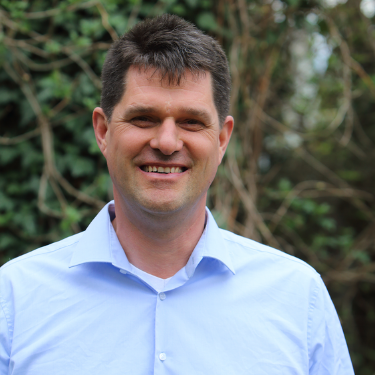
Dr. Rainer Raab, an Austrian national, is an ecologist, with a life-long vocation and action in the field of nature conservation. He studied Zoology at the University Vienna. Since 1991 he did numerous dragonfly and bird related projects for different clients with the focus on cross-border conservation project for the Great Bustard. Rainer Raab had his first sighting of the Great Bustard out of private interest already in the years 1990 and 1991 in Marchfeld. Since spring 1999 until summer 2014 he spent more than 6.500 hours in the field (private) in the Austrian Bustard areas and is still excited about each and every Great Bustard sighting. Since 2014, Rainer Raab has been intensively concerned with the subject of bird telemetry, both in Austria and in the neighboring countries and meanwhile all over Europe (and partly also in Asia). From July 2014 he equipped together with a lot of cooperation partners with special loggers more than 3,000 red kites in Europe and more than 65 Great Bustards in Austria and Hungary.
From February 2001 to September 2022, he was working as the “Technical Office for Biology”. Since September 2022 he is the CEO of the TB Raab Ltd.
On his limited spare time, Rainer spends time with ‘his’ Great Bustards in central Europe, but time to time, he also enjoys riding his horse and walking with his dog.
From February 2001 to September 2022, he was working as the “Technical Office for Biology”. Since September 2022 he is the CEO of the TB Raab Ltd.
On his limited spare time, Rainer spends time with ‘his’ Great Bustards in central Europe, but time to time, he also enjoys riding his horse and walking with his dog.
- Email:rainer.raab@tbraab.at

Mimi Kessler
Eurasian Bustard Alliance
Dr Mimi Kessler is a PhD Biologist who has focused her career on the ecology and conservation of bustard species. She serves as Co-chair of the IUCN SSC Bustard Specialist Group.
Through her leadership of the Eurasian Bustard Alliance, she has spearheaded long-term international research and policy efforts focused on endangered Great Bustard populations across North Eurasia, particularly Mongolia and Kazakhstan. This work includes the first telemetry to chart the migration routes of the Eastern subspecies of Great Bustard, and population genetic research which quantified the degree of separation between the two subspecies. Over the past twelve years, she has worked closely with the Government of Mongolia and the Wildlife Science and Conservation Center of Mongolia to successfully advance multiple proposals on the conservation of bustards through the Convention on Migratory Species, including the global uplisting of the Great Bustard, and the drafting and adoption of an Action Plan for Asian populations of the species.
Dr Kessler is frequently consulted by NGOs, investment banks, and development projects concerning the impact of renewable energy infrastructure on endangered bustard populations across Central, South and Southeastern Asia.
She currently lives in Riyadh, where she works as Director of Science for an initiative aimed at the sustainable rewilding of resident Houbara populations across the Kingdom of Saudi Arabia.
Dr Kessler speaks fluent Russian, advanced Mongolian, and also has experience with Uzbek, Kazakh, and Spanish languages. She is now studying Arabic. Predictably, she enjoys birdwatching and spending time in nature. In coming years, she hopes to travel to Africa to observe the incredible diversity of bustards on that continent.
Through her leadership of the Eurasian Bustard Alliance, she has spearheaded long-term international research and policy efforts focused on endangered Great Bustard populations across North Eurasia, particularly Mongolia and Kazakhstan. This work includes the first telemetry to chart the migration routes of the Eastern subspecies of Great Bustard, and population genetic research which quantified the degree of separation between the two subspecies. Over the past twelve years, she has worked closely with the Government of Mongolia and the Wildlife Science and Conservation Center of Mongolia to successfully advance multiple proposals on the conservation of bustards through the Convention on Migratory Species, including the global uplisting of the Great Bustard, and the drafting and adoption of an Action Plan for Asian populations of the species.
Dr Kessler is frequently consulted by NGOs, investment banks, and development projects concerning the impact of renewable energy infrastructure on endangered bustard populations across Central, South and Southeastern Asia.
She currently lives in Riyadh, where she works as Director of Science for an initiative aimed at the sustainable rewilding of resident Houbara populations across the Kingdom of Saudi Arabia.
Dr Kessler speaks fluent Russian, advanced Mongolian, and also has experience with Uzbek, Kazakh, and Spanish languages. She is now studying Arabic. Predictably, she enjoys birdwatching and spending time in nature. In coming years, she hopes to travel to Africa to observe the incredible diversity of bustards on that continent.

Muhammad Jamshed Iqbal Chaudhry
WWF-Pakistan

Muhammad Jamshed Iqbal Chaudhry
WWF-Pakistan
Muhammad Jamshed Iqbal Chaudhry, Msc, M.Phil, a Pakistani national, is a conservation biologist with over 25 years of national and international professional experience in research, conservation and natural resource and wildlife management. He studied Zoology at Bahauddin Zakariya University in Multan, Pakistan, Environmental Biology at the Quaid-i-Azam University in Islamabad, Pakistan and Conservation Biology with a specialization in Ornithology at the University of Cape Town in South Africa. He has authored and co-authored species conservation and action plans, management plans for protected areas and over 50 research articles in peer-reviewed international journals, including the most prestigious journal “Nature”.
In 1999, he began his professional carrier with the Ornithological Society of Pakistan, working on the Asian Vulture Crisis Project in Pakistan under the training and coordination of The Peregrine Fund. During this period, he collaborated with renowned raptor biologists worldwide and was part of the team that identified the cause of the population decline of White-rumped Vultures (Gyps bengalensis) and published the results “Diclofenac residues as the cause of population decline of White-backed Vultures in Pakistan” in Nature in 2004.
In 2008, he joined WWF-Pakistan, dedicating his efforts to the conservation and management of various wildlife species. For the past two decades, he has been monitoring the population of the Great Indian Bustard in Pakistan. From 2017 to 2019, he conducted extensive surveys to assess the populations of the Asian Houbara Bustard in the Punjab province. Currently, he serves as the Senior Manager of Research and Conservation and is the focal point for the Biodiversity Practice at WWF-Pakistan. In this role, he oversees research initiatives, implement conservation projects, develops conservation strategies, and coordinates efforts to protect and sustain biodiversity within the region.
In 1999, he began his professional carrier with the Ornithological Society of Pakistan, working on the Asian Vulture Crisis Project in Pakistan under the training and coordination of The Peregrine Fund. During this period, he collaborated with renowned raptor biologists worldwide and was part of the team that identified the cause of the population decline of White-rumped Vultures (Gyps bengalensis) and published the results “Diclofenac residues as the cause of population decline of White-backed Vultures in Pakistan” in Nature in 2004.
In 2008, he joined WWF-Pakistan, dedicating his efforts to the conservation and management of various wildlife species. For the past two decades, he has been monitoring the population of the Great Indian Bustard in Pakistan. From 2017 to 2019, he conducted extensive surveys to assess the populations of the Asian Houbara Bustard in the Punjab province. Currently, he serves as the Senior Manager of Research and Conservation and is the focal point for the Biodiversity Practice at WWF-Pakistan. In this role, he oversees research initiatives, implement conservation projects, develops conservation strategies, and coordinates efforts to protect and sustain biodiversity within the region.
- Email:jichaudhry@wwf.org.pk

Éva Fejes
Hungarian Ministry of Agriculture

Éva Fejes
Hungarian Ministry of Agriculture
Muhammad Jamshed Iqbal Chaudhry, Msc, M.Phil, a Pakistani national, is a conservation biologist with over 25 years of national and international professional experience in research, conservation and natural resource and wildlife management. He studied Zoology at Bahauddin Zakariya University in Multan, Pakistan, Environmental Biology at the Quaid-i-Azam University in Islamabad, Pakistan and Conservation Biology with a specialization in Ornithology at the University of Cape Town in South Africa. He has authored and co-authored species conservation and action plans, management plans for protected areas and over 50 research articles in peer-reviewed international journals, including the most prestigious journal “Nature”.
In 1999, he began his professional carrier with the Ornithological Society of Pakistan, working on the Asian Vulture Crisis Project in Pakistan under the training and coordination of The Peregrine Fund. During this period, he collaborated with renowned raptor biologists worldwide and was part of the team that identified the cause of the population decline of White-rumped Vultures (Gyps bengalensis) and published the results “Diclofenac residues as the cause of population decline of White-backed Vultures in Pakistan” in Nature in 2004.
In 2008, he joined WWF-Pakistan, dedicating his efforts to the conservation and management of various wildlife species. For the past two decades, he has been monitoring the population of the Great Indian Bustard in Pakistan. From 2017 to 2019, he conducted extensive surveys to assess the populations of the Asian Houbara Bustard in the Punjab province. Currently, he serves as the Senior Manager of Research and Conservation and is the focal point for the Biodiversity Practice at WWF-Pakistan. In this role, he oversees research initiatives, implement conservation projects, develops conservation strategies, and coordinates efforts to protect and sustain biodiversity within the region.
In 1999, he began his professional carrier with the Ornithological Society of Pakistan, working on the Asian Vulture Crisis Project in Pakistan under the training and coordination of The Peregrine Fund. During this period, he collaborated with renowned raptor biologists worldwide and was part of the team that identified the cause of the population decline of White-rumped Vultures (Gyps bengalensis) and published the results “Diclofenac residues as the cause of population decline of White-backed Vultures in Pakistan” in Nature in 2004.
In 2008, he joined WWF-Pakistan, dedicating his efforts to the conservation and management of various wildlife species. For the past two decades, he has been monitoring the population of the Great Indian Bustard in Pakistan. From 2017 to 2019, he conducted extensive surveys to assess the populations of the Asian Houbara Bustard in the Punjab province. Currently, he serves as the Senior Manager of Research and Conservation and is the focal point for the Biodiversity Practice at WWF-Pakistan. In this role, he oversees research initiatives, implement conservation projects, develops conservation strategies, and coordinates efforts to protect and sustain biodiversity within the region.
- Email:eva.fejes@am.gov.hu
Regional coordinators: Africa

Titus Imboma
Eastern Africa

Titus Imboma
Eastern Africa
Dr. Titus Imboma is a research scientist with focus on avian ecology and conservation as well curatorial work in Museums scientific bird collection, based at Ornithology Department at National Museums of Kenya, in Nairobi. I have gained experience in field research and avian monitoring in the past 20 years especially, working on both terrestrial and waterbird ecology. I have had keen interest in Training and capacity building in local ornithology and avi-tourism, training and impacting skills and knowledge in sustainable bird monitoring and research in local people who later become field ornithologists and avian tour leaders across Kenya and East Africa. I have skills in agro—ecology where we relate birds and ecosystem services especially in agriculture, with keen interest in use of biological control in vast agricultural landscapes. To execute my duties, I work with other partners in both government and None –government departments including Kenya Wildlife Service, Kenya Medical Research Institute and International Livestock Research Institute in different projects including waterbird monitoring, avian tracking projects including and one-health program. I organize and coordinate bird ringing/banding program, a citizen science training program at Museums in Nairobi. I also organize and lead general ecology and birding tours for small groups in Kenya and Tanzania.
I am a regional coordinator Bustards Without Borders for East Africa. This is a new initiative with expertise across the world working to create a Multi-species Action Plan (MsAP) for conservation of world bustard species under the African-Eurasian Migratory Landbirds Action Plan (AEMLAP), in coordination with the Convention on the Conservation of Migratory Species of Wild Animals. I am a member of Bird Committee of the East African Natural History Society working in support of conservation of birds and their critical habitats in Kenya. I also assist to document and curate our scientific and avian exhibits in both ornithological collections and galleries at the National Museums of Kenya.

Mattheuns Pretorius
Southern Africa

Mattheuns Pretorius
Southern Africa
Mattheuns (Matt) Pretorius is a conservation scientist who is driven to find solutions for avian collisions with power lines. Based in South Africa, Matt is a Project Manager with the Wildlife and Energy Programme (WEP) of the Endangered Wildlife Trust (EWT). The EWT has a long-standing partnership with Eskom, South Africa’s principal power utility, and Matt’s role within the partnership is to research solutions focused on avian protection from overhead power lines. These include projects that test new mitigation measures, and how certain threatened species respond to these measures. Matt is also the chief drone pilot for the EWT Drone Unit, flying various conservation missions under its Unmanned Aerial Systems Operating Certificate.
His work has seen him hiking through ‘Big-5’ wilderness to survey rare owls, braving ice cold water to trap and fit tracking devices to Lesser Flamingos, hand-catching drones on a small boat bobbing about in big ocean swell, becoming absorbed into the world of 3D printing and modelling, and designing custom drone solutions for power line marking.
Matt studied nature conservation at the Tshwane University of Technology, where he obtained a masters degree in 2019. As a part of his undergraduate studies, Matt was placed in the Kgalagadi Transfrontier Park to complete a year of experiential learning as a cadet ranger. There he developed a new appreciation for the birds that inhabit arid landscapes, including Ludwig’s and Kori Bustards. As an avid nature photographer, Matt frequently returns to the Kgalagadi, and he has won several national and international awards for his images.
In 2021 Matt started a new study on the movement ecology of Ludwig’s Bustards, looking for clues as to why they are so susceptible to collisions with power line cables. In 2022 and 2023 he managed to capture and fit GPS tracking devices to 16 individuals, and the data he has received has already shed some new light on their sensitivity to power line collisions. Matt has recently also been tasked with a study of Denham’s and White-bellied Bustard movements to help identify areas of sensitivity with regard to the burgeoning renewable energy development in eastern South Africa.
His work has seen him hiking through ‘Big-5’ wilderness to survey rare owls, braving ice cold water to trap and fit tracking devices to Lesser Flamingos, hand-catching drones on a small boat bobbing about in big ocean swell, becoming absorbed into the world of 3D printing and modelling, and designing custom drone solutions for power line marking.
Matt studied nature conservation at the Tshwane University of Technology, where he obtained a masters degree in 2019. As a part of his undergraduate studies, Matt was placed in the Kgalagadi Transfrontier Park to complete a year of experiential learning as a cadet ranger. There he developed a new appreciation for the birds that inhabit arid landscapes, including Ludwig’s and Kori Bustards. As an avid nature photographer, Matt frequently returns to the Kgalagadi, and he has won several national and international awards for his images.
In 2021 Matt started a new study on the movement ecology of Ludwig’s Bustards, looking for clues as to why they are so susceptible to collisions with power line cables. In 2022 and 2023 he managed to capture and fit GPS tracking devices to 16 individuals, and the data he has received has already shed some new light on their sensitivity to power line collisions. Matt has recently also been tasked with a study of Denham’s and White-bellied Bustard movements to help identify areas of sensitivity with regard to the burgeoning renewable energy development in eastern South Africa.

Sidi Imad Cherkaoui
Northern Africa

Sidi Imad Cherkaoui
Northern Africa
Sidi Imad Cherkaoui is Professor at the "Institut Scientifique de Rabat, Mohamed 5 University (Morocco). Previously, he worked for BirdLife International (2009-2015) and for WWF (2003-2008). He is member of several IUCN Commissions and SSC groups as well as TAG of UNEP/CMS/Raptors and formerly AEWA TC for the MENA Region etc. His research field concerns conservation biology and particularly the relationships between the landscape ecology and the ecology of animal vertebrate populations. He has long been interested in population dynamics, study of species's conservation status, home range, diet or breeding success in animal populations, wildlife-Human conflicts ect. Much of my research has focused on the functioning of bird populations used as indicators of ecosystems' quality.

Sam Ivande
West Africa

Sam Ivande
West Africa
Sam Ivande is a conservation biologist and ornithologist with over two decades of experience working across West Africa. He currently serves as the National Species Conservation Coordinator at the Indianapolis Zoo and is a member of the IUCN SSC. Prior to this, he served as the Research and Teaching Director at the A.P. Leventis Ornithological Research Institute (APLORI) - West Africa's foremost conservation and ornithology training institute. Sam has led numerous capacity-building, field research, and species conservation initiatives in the region, with a strong focus on birds as flagships for broader biodiversity action. He helped establish the Nigerian Bird Atlas Project - one of West Africa’s largest citizen science programs and has collaborated widely with researchers, communities, and institutions to advance conservation science and practice. As BWB’s West Africa Coordinator, Sam is leading regional efforts to inform and shape the Bustard Multi-species Action Plan by engaging experts and compiling key data on the conservation status of bustards across the region.
Regional coordinators: Asia

Maxim Koshkin
Central Asia

Maxim Koshkin
Central Asia
Dr Maxim Koshkin is a dedicated conservation ecologist, who devoted his career to biodiversity conservation in Central Asia.
His career has revolved around the ecology and conservation of globally threatened species, notably the Asian Houbara, Sociable Lapwing, Saker Falcon, and Snow Leopard, spanning diverse landscapes, from the steppes and deserts to the mountains of Central Asia and beyond. During Maxim’s 20-year career in biodiversity conservation and research, spanning Kazakhstan, Kyrgyzstan, and Uzbekistan, he has collaborated with a wide array of stakeholders, including conservation NGOs, state agencies and universities. This experience has given him a deep understanding of the region's conservation challenges and the skills to overcome them. His research resulted in 22 publications in peer-reviewed journals, focusing on research and conservation of threatened species and habitats of Central Asia. His education includes over 4 years of intensive PhD research on the Sustainable Management of Asian Houbara in Uzbekistan, as part of the collaboration between the University of East Anglia (UK), BirdLife International and the Emirates Bird Breeding Centre for Conservation (EBBCC), culminating in 3 peer-reviewed publications focusing on species ecology. Maxim’s fieldwork included population surveys, nest productivity monitoring, satellite tagging and tracking, and assessments of grazing and habitat impact on species density and nest productivity. As part of his Master’s degree research, he was surveying Little Bustard in the steppes of Central Kazakhstan and is currently involved in the assessment of the status of this species in this country.
He is currently based in Kyrgyzstan, where during the last 5 years he has been working as a regional coordinator for a large counter illegal wildlife trade project at the local Ilbirs Foundation.
Maxim is a native Russian speaker and speaks fluent English and basic German. His free time he spends exploring outdoors and enjoys wildlife photography and various outdoor sports.
His career has revolved around the ecology and conservation of globally threatened species, notably the Asian Houbara, Sociable Lapwing, Saker Falcon, and Snow Leopard, spanning diverse landscapes, from the steppes and deserts to the mountains of Central Asia and beyond. During Maxim’s 20-year career in biodiversity conservation and research, spanning Kazakhstan, Kyrgyzstan, and Uzbekistan, he has collaborated with a wide array of stakeholders, including conservation NGOs, state agencies and universities. This experience has given him a deep understanding of the region's conservation challenges and the skills to overcome them. His research resulted in 22 publications in peer-reviewed journals, focusing on research and conservation of threatened species and habitats of Central Asia. His education includes over 4 years of intensive PhD research on the Sustainable Management of Asian Houbara in Uzbekistan, as part of the collaboration between the University of East Anglia (UK), BirdLife International and the Emirates Bird Breeding Centre for Conservation (EBBCC), culminating in 3 peer-reviewed publications focusing on species ecology. Maxim’s fieldwork included population surveys, nest productivity monitoring, satellite tagging and tracking, and assessments of grazing and habitat impact on species density and nest productivity. As part of his Master’s degree research, he was surveying Little Bustard in the steppes of Central Kazakhstan and is currently involved in the assessment of the status of this species in this country.
He is currently based in Kyrgyzstan, where during the last 5 years he has been working as a regional coordinator for a large counter illegal wildlife trade project at the local Ilbirs Foundation.
Maxim is a native Russian speaker and speaks fluent English and basic German. His free time he spends exploring outdoors and enjoys wildlife photography and various outdoor sports.

Muhammad Jamshed Iqbal Chaudhry
South Asia

Muhammad Jamshed Iqbal Chaudhry
South Asia
Muhammad Jamshed Iqbal Chaudhry, Msc, M.Phil, a Pakistani national, is a conservation biologist with over 25 years of national and international professional experience in research, conservation and natural resource and wildlife management. He studied Zoology at Bahauddin Zakariya University in Multan, Pakistan, Environmental Biology at the Quaid-i-Azam University in Islamabad, Pakistan and Conservation Biology with a specialization in Ornithology at the University of Cape Town in South Africa. He has authored and co-authored species conservation and action plans, management plans for protected areas and over 50 research articles in peer-reviewed international journals, including the most prestigious journal “Nature”.
In 1999, he began his professional carrier with the Ornithological Society of Pakistan, working on the Asian Vulture Crisis Project in Pakistan under the training and coordination of The Peregrine Fund. During this period, he collaborated with renowned raptor biologists worldwide and was part of the team that identified the cause of the population decline of White-rumped Vultures (Gyps bengalensis) and published the results “Diclofenac residues as the cause of population decline of White-backed Vultures in Pakistan” in Nature in 2004.
In 2008, he joined WWF-Pakistan, dedicating his efforts to the conservation and management of various wildlife species. For the past two decades, he has been monitoring the population of the Great Indian Bustard in Pakistan. From 2017 to 2019, he conducted extensive surveys to assess the populations of the Asian Houbara Bustard in the Punjab province. Currently, he serves as the Senior Manager of Research and Conservation and is the focal point for the Biodiversity Practice at WWF-Pakistan. In this role, he oversees research initiatives, implement conservation projects, develops conservation strategies, and coordinates efforts to protect and sustain biodiversity within the region.
In 1999, he began his professional carrier with the Ornithological Society of Pakistan, working on the Asian Vulture Crisis Project in Pakistan under the training and coordination of The Peregrine Fund. During this period, he collaborated with renowned raptor biologists worldwide and was part of the team that identified the cause of the population decline of White-rumped Vultures (Gyps bengalensis) and published the results “Diclofenac residues as the cause of population decline of White-backed Vultures in Pakistan” in Nature in 2004.
In 2008, he joined WWF-Pakistan, dedicating his efforts to the conservation and management of various wildlife species. For the past two decades, he has been monitoring the population of the Great Indian Bustard in Pakistan. From 2017 to 2019, he conducted extensive surveys to assess the populations of the Asian Houbara Bustard in the Punjab province. Currently, he serves as the Senior Manager of Research and Conservation and is the focal point for the Biodiversity Practice at WWF-Pakistan. In this role, he oversees research initiatives, implement conservation projects, develops conservation strategies, and coordinates efforts to protect and sustain biodiversity within the region.
- Email:jichaudhry@wwf.org.pk

Mimi Kessler
Southwest Asia

Mimi Kessler
Southwest Asia
Dr Mimi Kessler is a PhD Biologist who has focused her career on the ecology and conservation of bustard species. She serves as Co-chair of the IUCN SSC Bustard Specialist Group.
Through her leadership of the Eurasian Bustard Alliance, she has spearheaded long-term international research and policy efforts focused on endangered Great Bustard populations across North Eurasia, particularly Mongolia and Kazakhstan. This work includes the first telemetry to chart the migration routes of the Eastern subspecies of Great Bustard, and population genetic research which quantified the degree of separation between the two subspecies. Over the past twelve years, she has worked closely with the Government of Mongolia and the Wildlife Science and Conservation Center of Mongolia to successfully advance multiple proposals on the conservation of bustards through the Convention on Migratory Species, including the global uplisting of the Great Bustard, and the drafting and adoption of an Action Plan for Asian populations of the species.
Dr Kessler is frequently consulted by NGOs, investment banks, and development projects concerning the impact of renewable energy infrastructure on endangered bustard populations across Central, South and Southeastern Asia.
She currently lives in Riyadh, where she works as Director of Science for an initiative aimed at the sustainable rewilding of resident Houbara populations across the Kingdom of Saudi Arabia.
Dr Kessler speaks fluent Russian, advanced Mongolian, and also has experience with Uzbek, Kazakh, and Spanish languages. She is now studying Arabic. Predictably, she enjoys birdwatching and spending time in nature. In coming years, she hopes to travel to Africa to observe the incredible diversity of bustards on that continent.
Through her leadership of the Eurasian Bustard Alliance, she has spearheaded long-term international research and policy efforts focused on endangered Great Bustard populations across North Eurasia, particularly Mongolia and Kazakhstan. This work includes the first telemetry to chart the migration routes of the Eastern subspecies of Great Bustard, and population genetic research which quantified the degree of separation between the two subspecies. Over the past twelve years, she has worked closely with the Government of Mongolia and the Wildlife Science and Conservation Center of Mongolia to successfully advance multiple proposals on the conservation of bustards through the Convention on Migratory Species, including the global uplisting of the Great Bustard, and the drafting and adoption of an Action Plan for Asian populations of the species.
Dr Kessler is frequently consulted by NGOs, investment banks, and development projects concerning the impact of renewable energy infrastructure on endangered bustard populations across Central, South and Southeastern Asia.
She currently lives in Riyadh, where she works as Director of Science for an initiative aimed at the sustainable rewilding of resident Houbara populations across the Kingdom of Saudi Arabia.
Dr Kessler speaks fluent Russian, advanced Mongolian, and also has experience with Uzbek, Kazakh, and Spanish languages. She is now studying Arabic. Predictably, she enjoys birdwatching and spending time in nature. In coming years, she hopes to travel to Africa to observe the incredible diversity of bustards on that continent.
Regional coordinators: Australia

Saurav Lamichhane
I am a wildlife ecologist currently pursuing my PhD at Murdoch University in Western Australia. I’m particularly interested in conducting research using a combination of field and remote sensing data and analyzing it using various statistical modeling approaches. My current research focuses on the ecology of the Australian bustard, with a particular emphasis on evaluating the potential impacts of renewable energy development on this species.
Regional coordinators: Europe

Rainer Raab
Dr. Rainer Raab, an Austrian national, is an ecologist, with a life-long vocation and action in the field of nature conservation. He studied Zoology at the University Vienna. Since 1991 he did numerous dragonfly and bird related projects for different clients with the focus on cross-border conservation project for the Great Bustard. Rainer Raab had his first sighting of the Great Bustard out of private interest already in the years 1990 and 1991 in Marchfeld. Since spring 1999 until summer 2014 he spent more than 6.500 hours in the field (private) in the Austrian Bustard areas and is still excited about each and every Great Bustard sighting. Since 2014, Rainer Raab has been intensively concerned with the subject of bird telemetry, both in Austria and in the neighboring countries and meanwhile all over Europe (and partly also in Asia). From July 2014 he equipped together with a lot of cooperation partners with special loggers more than 3,000 red kites in Europe and more than 65 Great Bustards in Austria and Hungary.
From February 2001 to September 2022, he was working as the “Technical Office for Biology”. Since September 2022 he is the CEO of the TB Raab Ltd.
On his limited spare time, Rainer spends time with ‘his’ Great Bustards in central Europe, but time to time, he also enjoys riding his horse and walking with his dog.
From February 2001 to September 2022, he was working as the “Technical Office for Biology”. Since September 2022 he is the CEO of the TB Raab Ltd.
On his limited spare time, Rainer spends time with ‘his’ Great Bustards in central Europe, but time to time, he also enjoys riding his horse and walking with his dog.
- Email:rainer.raab@tbraab.at