Bustards Without Borders

General overview

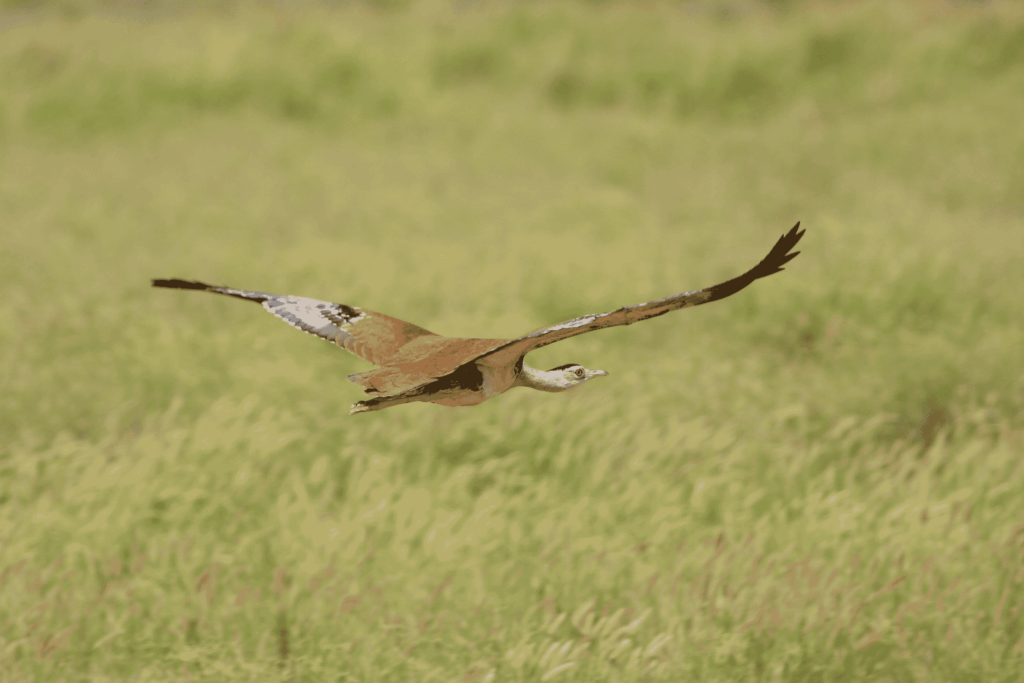
The bustard family consists of 26 species of landbirds, distributed across the eastern hemisphere. These birds include some of the heaviest animals capable of flight, and are famed for their elaborate breeding displays.

Bustards perform important ecological services in the form of insect pest control. They are sensitive to human disturbance and cannot thrive in landscapes that are managed unsustainably. In this way, bustards serve as indicators of responsible landscape management.

Bustards are now the most highly imperiled group of terrestrial birds, with 60% evaluated as threatened or near threatened with extinction. The threats facing bustards include unsustainable hunting and poaching, agricultural intensification, habitat degradation, poisoning with agricultural chemicals, and collisions with powerlines, among others.

BWB aims to unite stakeholders to address these diverse threats through coordinated action.

Take a look at some of the most endangered bustard species. We highlight the urgent need to accelerate targeted conservation efforts to prevent their functional extinction within a few decades.

The Bengal florican
(Houbaropsis bengalensis)
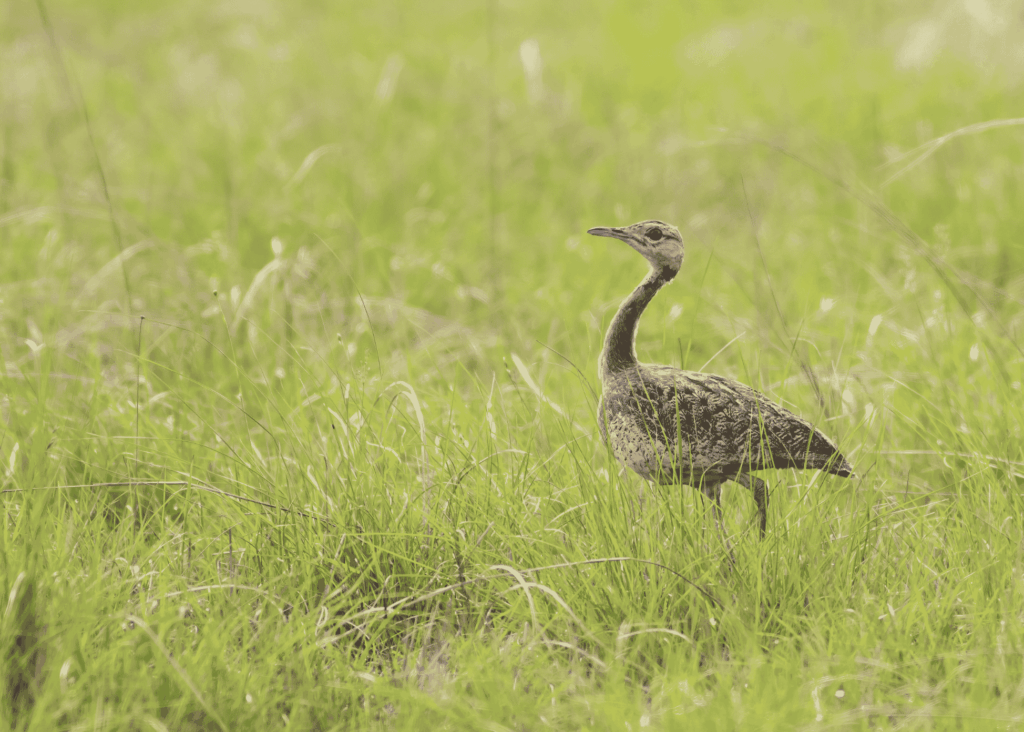
Critically Endangered, with a global population less than 1000 mature individuals and decreasing. This species performs a charming breeding display consisting of repeated leaps into the air. Conversion of its grassland habitat and intensification of agriculture threaten this bird, and collisions with expanding powerline network increase mortality. Now distributed only in small areas of Cambodia, India and Nepal.
wcs cambodia
gib wwf pakistan 3

Great Indian Bustard
(Ardeotis nigriceps)

One of the world's rarest birds, with less than 140 individuals remaining in the wild. Highly threatened by collisions with the expanding powerline network, habitat loss, degradation, predation and nest destruction by free-ranging dogs. Found only in India and Pakistan.

Great Bustard
(Otis tarda)

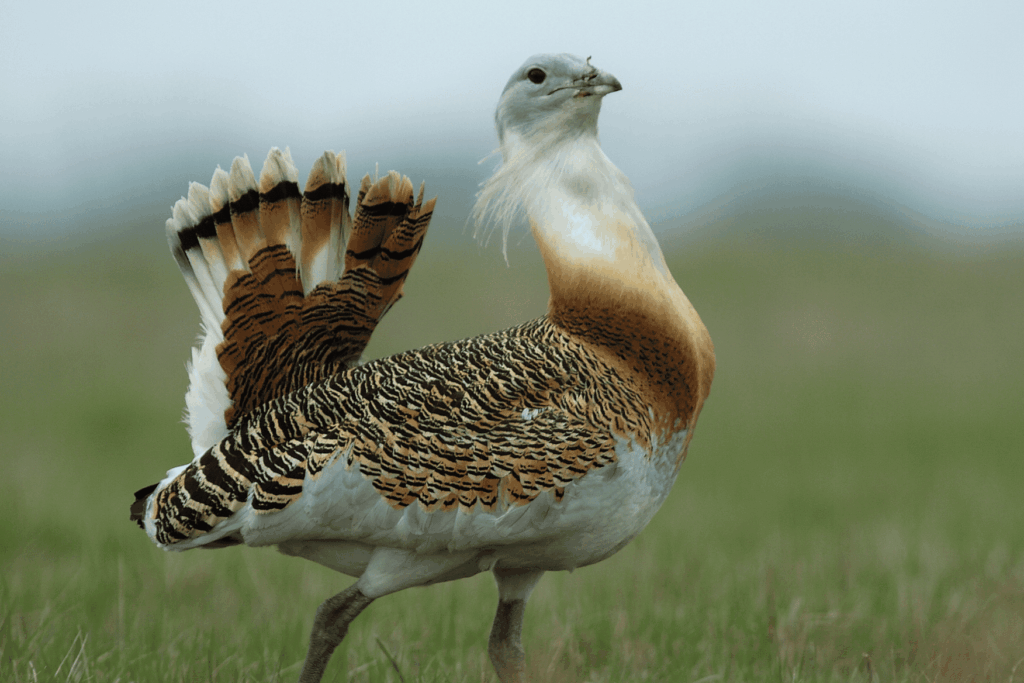
The breeding display of this species involves one of the most incredible transformations among birds, from a largely brown bird to a bright white dancing ball of feathers. Globally Endangered, with rapid population declines over the past decade in most parts of the range. Agricultural intensification, illegal hunting, collisions with powerlines are major challenges for this species. This species is increasingly restricted to small and fragmented populations across its former range from Portugal to Korea.
tuzok motko bela 0033(1)
Scroll to Top